Insert.Link
A self-serve marketplace for buying backlink placements — built around a page-level search index of 50M+ pages across 30,000+ publisher sites.
Context
Insert.Link is Admix Global's self-serve marketplace for buying backlink placements — the productized version of the agency's link-building services. Users browse an inventory of 30,000+ publisher sites, filter by page-level SEO metrics, and place orders directly, with API access for programmatic use.
The problem
Buying backlinks is historically an opaque, trust-poor process. The platform needed to make a huge, unfiltered inventory feel navigable — and make an industry known for being shady feel transparent — for three very different kinds of buyers: agencies managing multiple clients, solo freelancers running one campaign, and affiliates tracking referral earnings.
Constraints
- 30,000+ publisher sites, 50M+ indexed pages — search needed to work at page-level, not just domain-level
- Three distinct user segments sharing one core product, without fragmenting the experience
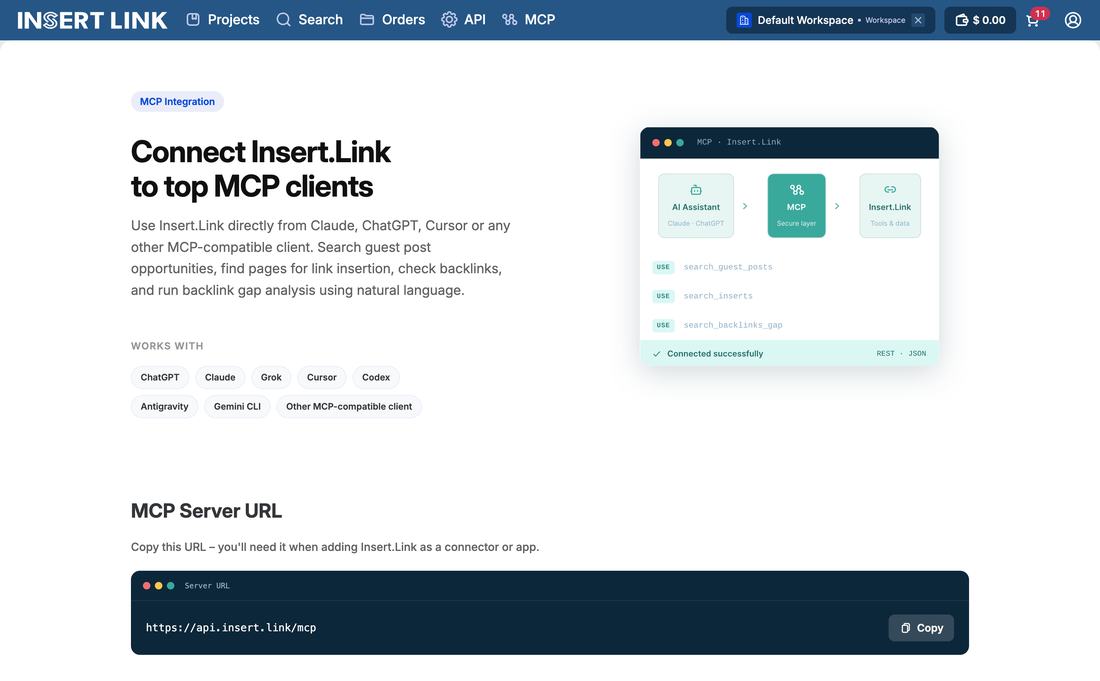
- A logged-in application (workspace, budgets, orders) behind a marketing shell, plus a public API/MCP surface for developer users
Process — search & filtering
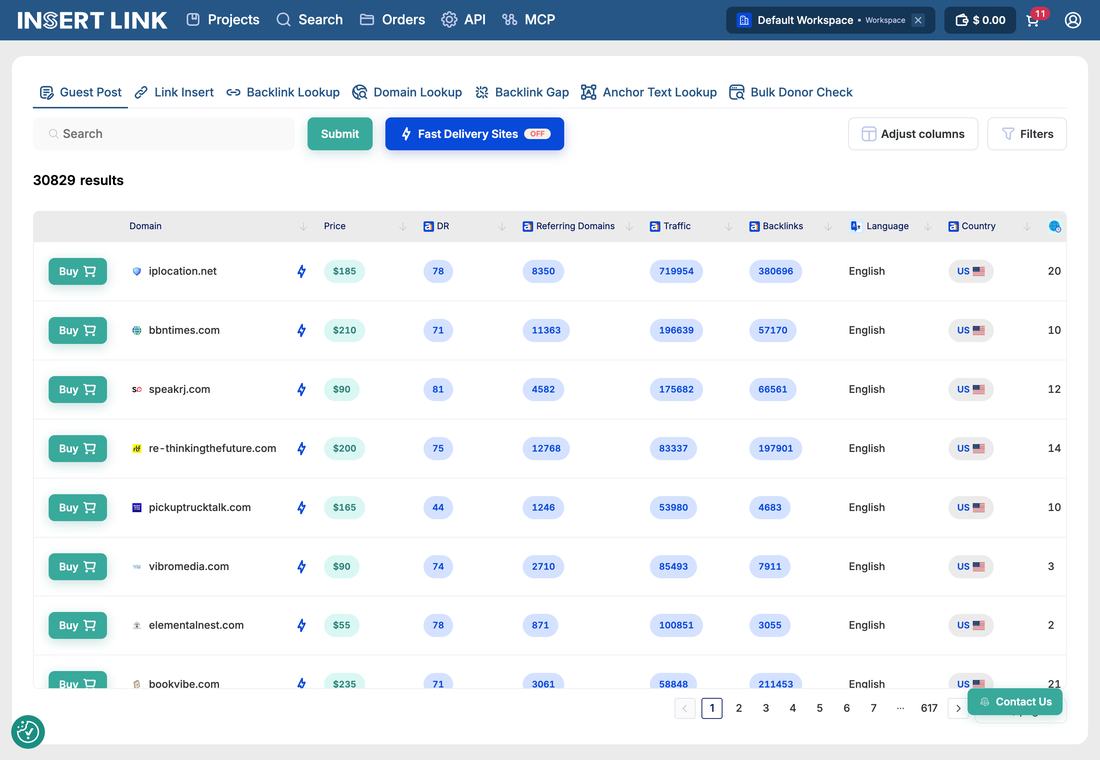
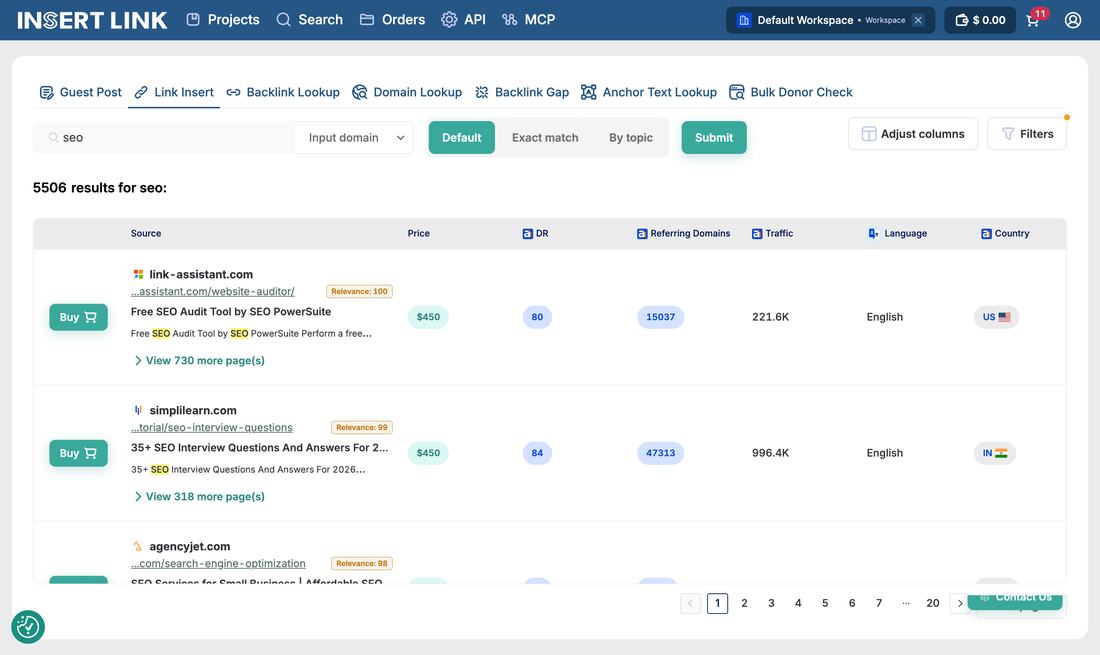
Early on, most link marketplaces I looked at filtered by domain only — which meant buyers still had to click into dozens of sites to check whether any given page was actually relevant to their topic. I designed the search around pages instead of domains, so relevance is judged the same way a buyer would judge it: by what's actually on the page, not just the domain it lives on.
That decision shaped everything downstream. A page-level index of 50M+ pages is only useful if buyers can narrow it fast, so I built the results as a dense, sortable table — price, DR, referring domains, traffic, language, country — designed to stay scannable at 30,000+ rows instead of collapsing into pagination fatigue. I split search into task-specific modes (guest post, link insert, backlink lookup, domain lookup, backlink gap, anchor text) rather than one generic search box, since each mode implies a different buyer intent and a different "done" state.
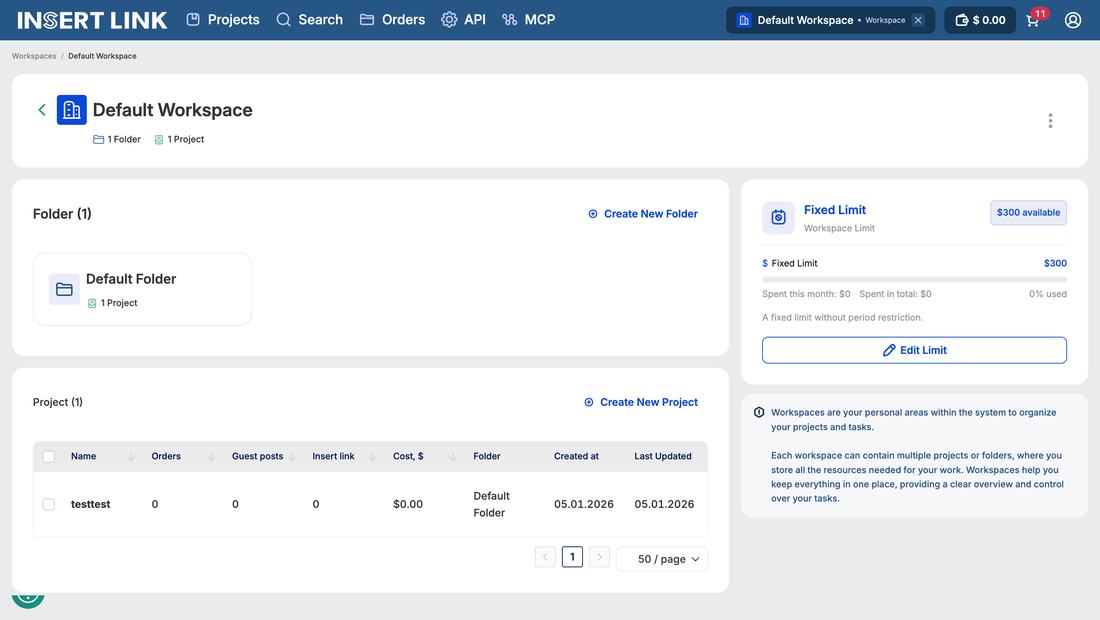
The workspace, budget, and order layer came out of watching how agencies actually work: one person managing several client campaigns needs folders, spend limits, and order history — a solo freelancer just needs to search and buy. Rather than building two products, I designed one flexible workspace model that scales down as easily as it scales up.
Solution — screens
On the ground
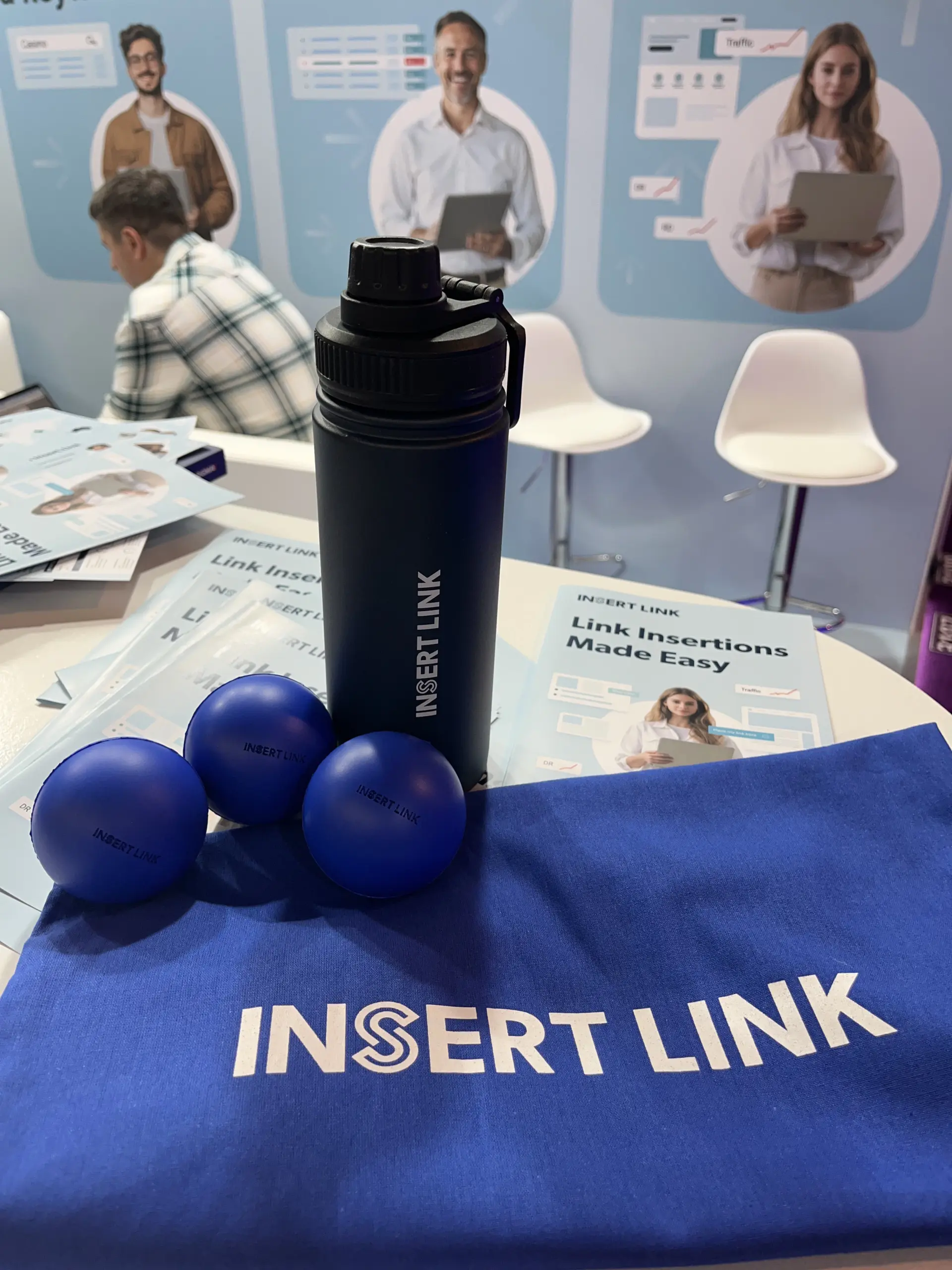
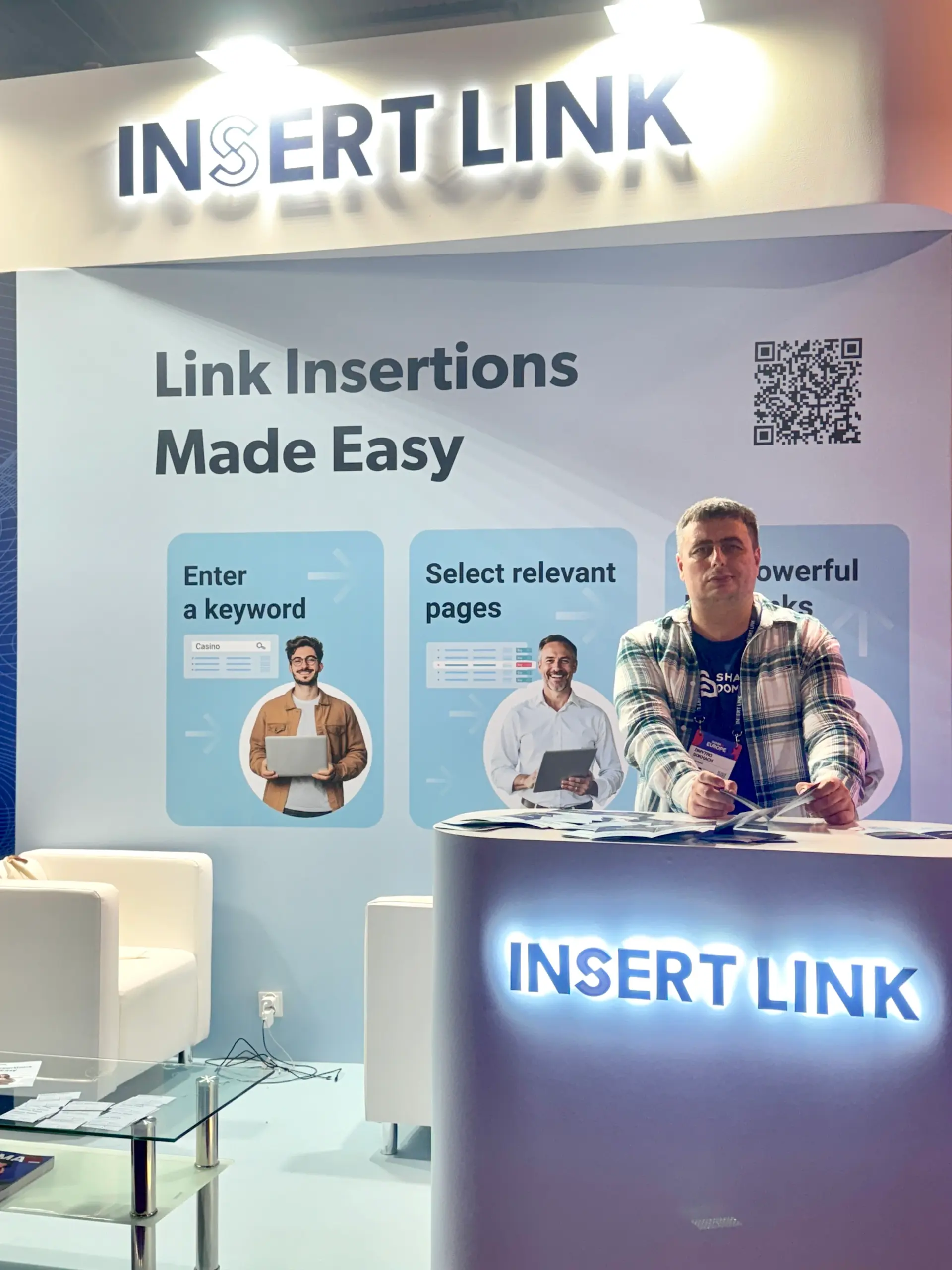
Beyond the screen, I've represented the product at industry conferences — talking through the search and workspace model face to face with the same agencies, freelancers, and affiliates it's designed for.
Outcome
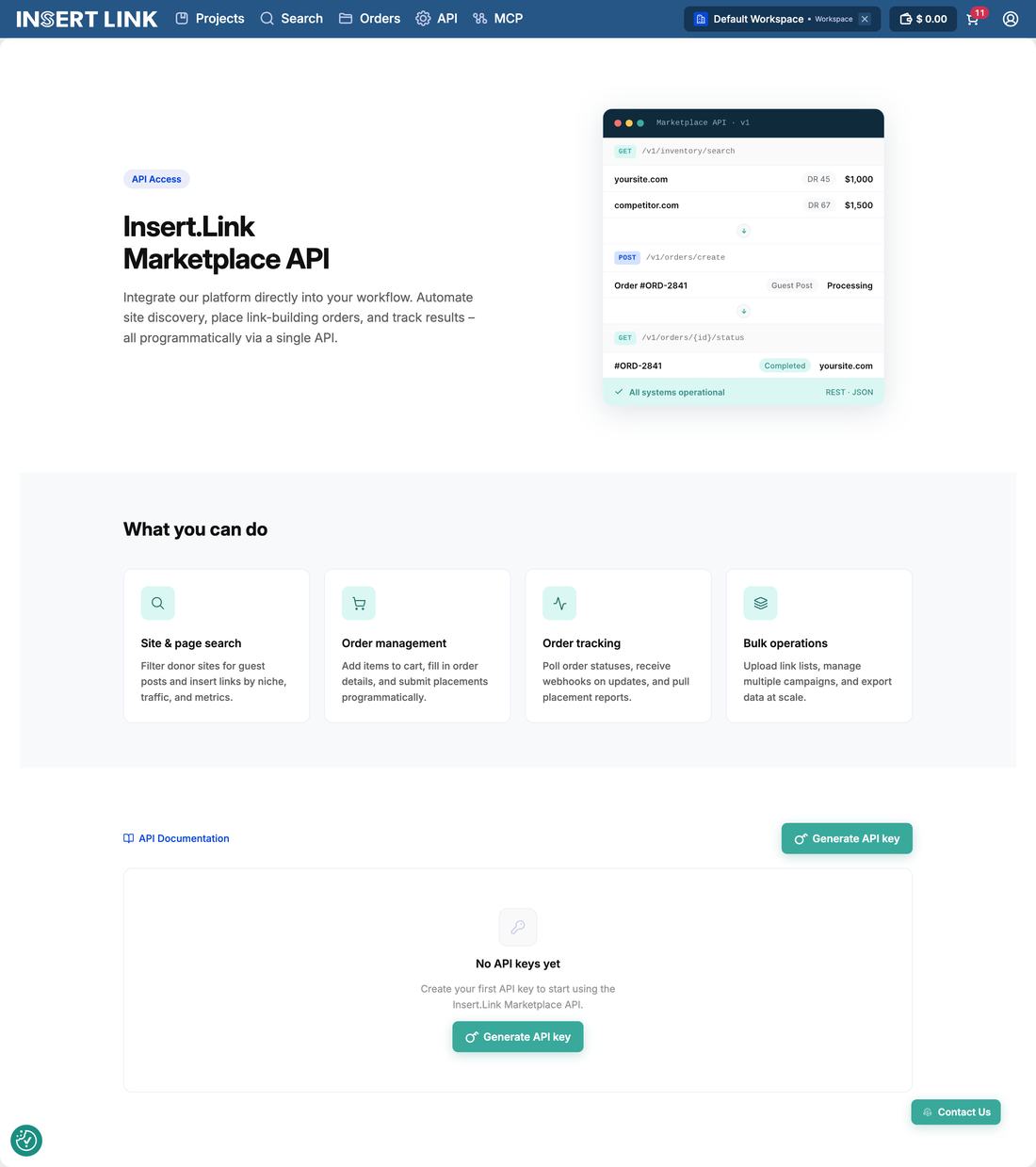
Shipped as the default search-and-order flow for agencies, freelancers, and affiliates, with API and MCP access for programmatic ordering — extending the same search logic to developer and AI-assistant workflows. The platform carries strong independent reviews on Trustpilot, G2, and DesignRush, which speaks to the buying experience as a whole, search included.
Reflection
Page-level search over domain-level was the harder path — indexing and ranking 50M+ individual pages costs far more than treating a domain as one unit. But domain-level filtering is exactly what made older marketplaces feel untrustworthy: a high-authority domain can still carry a page with zero relevance to a buyer's topic. Betting on the more expensive, more precise approach is what makes the "opaque industry" problem actually go away, instead of just being designed around.